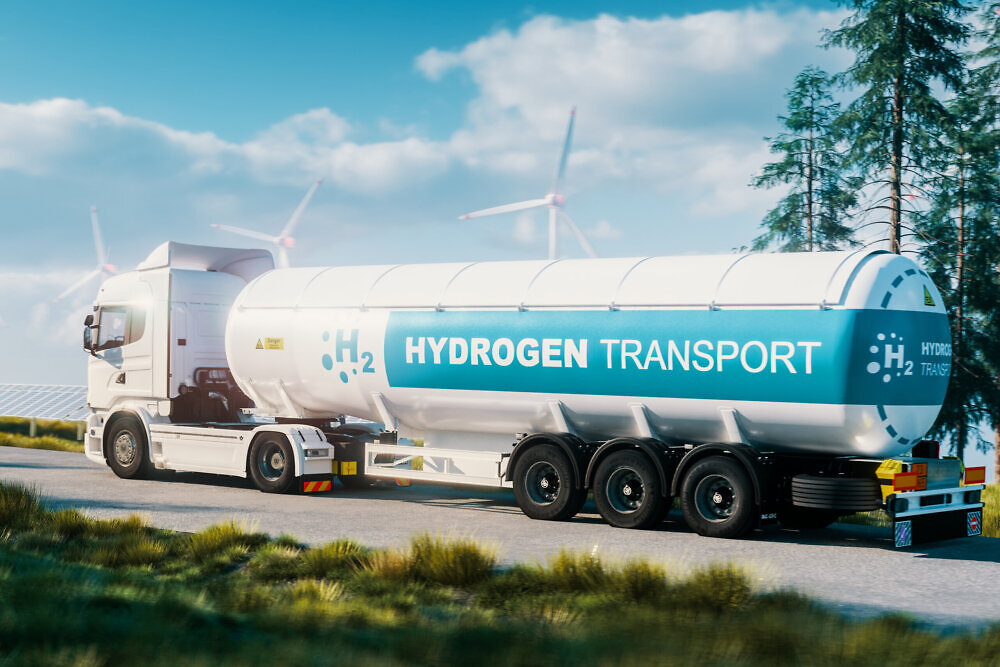
The Hydrogen Carrier Analysis Tool (HyCAT) estimates the cost and greenhouse gas emissions for long distance hydrogen shipping via hydrogen carriers. By specifying certain supply chain options such as hydrogen export country, hydrogen import country, electricity and natural gas cost and carbon intensity, and financing options, users can investigate the levelized cost and carbon intensity of hydrogen across various global supply chain. Hydrogen is versatile molecule that can be used as a source of energy or a chemical feedstock, but is challenging to handle due to its low density. Converting hydrogen from its gaseous forms into other substances (hydrogen carriers) can facilitate its storage and transportation. HyCAT allows users to compare between four different hydrogen carriers: liquid hydrogen, ammonia, liquid organic hydrogen carrier (toluene/methylcyclohexane), and E-methane. The tool also harmonizes reference data to allow for fair comparison between the carriers.
HyCAT was developed as part of a MITEI research project funded by ExxonMobil, and in collaboration with the ExxonMobil Technology and Engineering Company, and ExxonMobil Low Carbon Solutions.
You can access the HyCAT here.
Publications
Hydrogen carrier analysis tool (HyCAT): Intergrated economics and emissions assessment for long distance hydrogen transportation, Science Direct, 2026.
 Guiyan Zang
Former Research Lead
MIT Energy Initiative
Guiyan Zang
Former Research Lead
MIT Energy Initiative