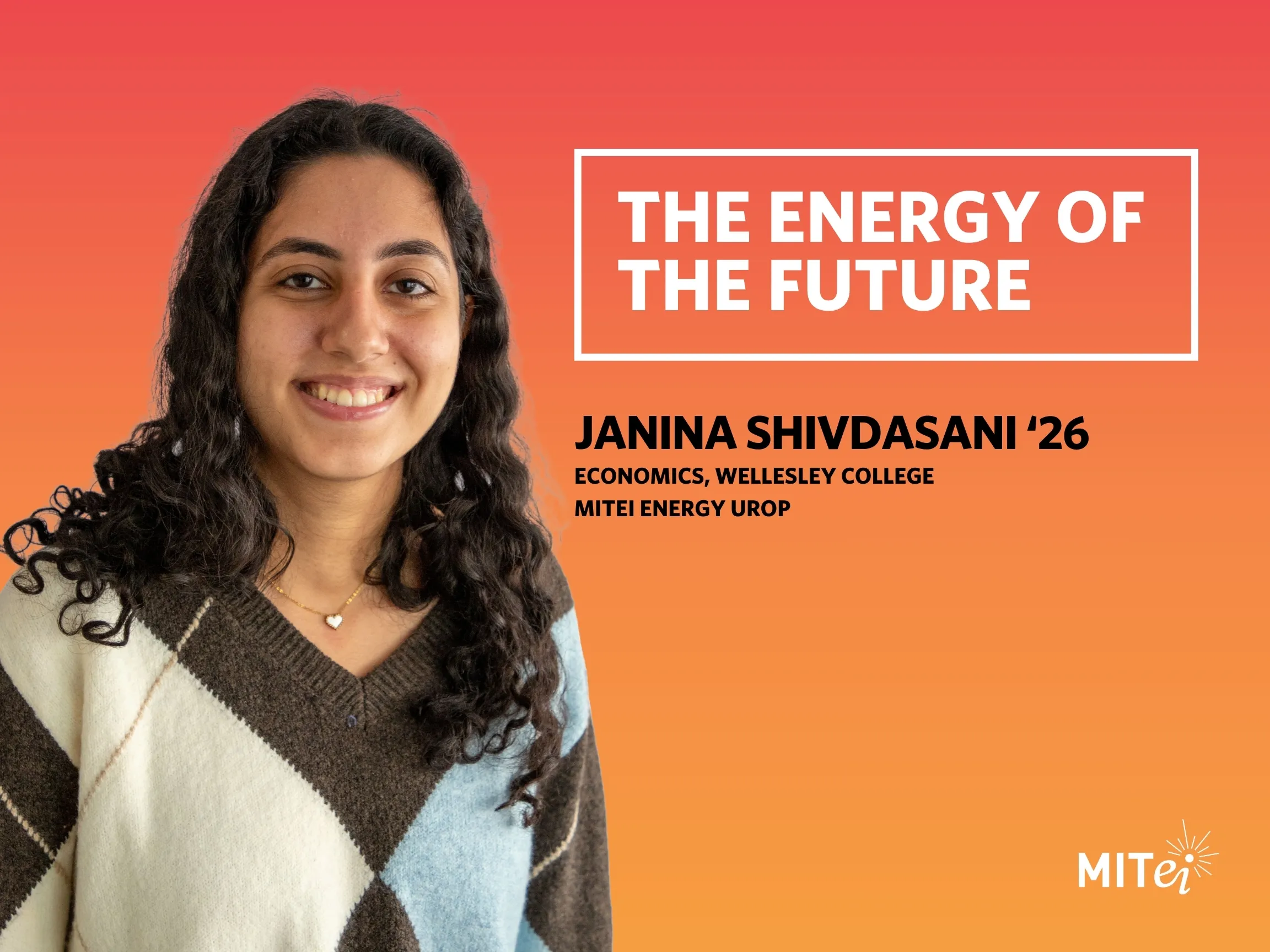
As a part of her MITEI Energy Undergraduate Research Opportunities Program (UROP) appointment, Janina Shivdasani '26 analyzed climate and energy research conducted at MIT and then translated those findings into something more digestible for a broader audience outside of academia, particularly policy makers. Shivdasani, an economics major at Wellesley College, reflects on the importance of this work while sharing her personal experiences with climate change.
Q. What are you researching in your UROP?
A. I wouldn’t categorize what I do as research, specifically. I would classify it more as analysis of the high caliber research produced at MIT. Though these researchers have significant expertise in climate change, sustainability, and environmental issues, frequently their findings are inaccessible to those outside of academia. My job is to package this information in a way that is digestible to a wider audience, particularly highlighting actionable insights for the Climate Policy Center’s target demographic, which is policy makers at the local, state, and federal levels.
Primarily, I worked on a monthly newsletter, which would focus on a pressing climate or energy topic identified by my supervisor. For example, data centers have been all the talk—both at the Institute and outside of it. My analysis focused on data center flexibility and the electrical grid. There are currently many data centers under construction, specifically in Texas. As these data centers are being built, it’s important to consider their impact on the surrounding environmental and electrical grid. Having research that makes recommendations on how best to manage and account for these impacts is critical at this stage while they are still being built, rather than having to fix things retroactively. I also thought that the concept of data center flexibility—where computing workloads can be shifted across time—was incredibly interesting. Though this flexibility can reduce operating and system costs, its ability to lower emissions depends entirely on the type of grid connected to it. This changed the way that I think about smart demand as a climate solution, and it represents the type of insights that would be valuable to decision makers in these spaces. It’s critical that they not only have access to relevant research insights, but that those insights be as accessible as possible to reduce barriers to quick, effective action.
Q. What made you decide to participate in a UROP at MIT?
A. The cross-registration program between Wellesley College and MIT allows students to take classes at either university, whether that be inside or outside of their major. One of the biggest advantages of this program is that Wellesley students also have the opportunity to participate in research projects at MIT through a UROP. Many of my friends and I have taken advantage of this program.
When I was looking through the available UROPs, I wanted to have a good match of interest, goal, and skill. My interest for a long time has been in trying to solve the climate crisis—as big as that sounds. My goal was to try to mitigate the effects that climate change has on high-risk communities, particularly in my home country of India. To get to that stage, I have a lot of skill building ahead of me. I felt that this UROP was a great starting point for that process.
Q. How have your experiences with climate change shaped your perspective on your academic and professional pursuits?
A. Climate change, and its impacts, have weighed heavily on me from a young age. I grew up in the state of Maharashtra, India, which has consistently reported the highest rate of farmer suicides for years, in a country that is one of the world’s biggest agricultural centers. The effects of climate change on crop production and yields have caused distress amongst these farmers, and I’ve grown increasingly frustrated by the lack of action politically to mitigate this problem.
The turning point for me in pursuing a deeper education in climate change happened in the summer of 2024 when I was home for summer break. The general elections in India were held during that summer and dozens of poll booth workers died due to extreme heat. It was barely covered by news outlets, and there was nothing really politically that changed as a result of it. That was the impetus for me making more active decisions about the classes I was taking being geared towards environmental issues, and a large part of my opting to take this UROP. That experience was also the catalyst in fine-tuning my professional interests and goals. After graduation this May, I’m excited to start working in economic consulting, specifically in the energy practice.
Something I wish I had known earlier in my undergraduate experience is that climate change can feel like this impending doomsday, and invoke a sense of helplessness in some, but you don’t have to fix it all at once. Every little bit of work that’s done for the climate crisis is making a difference, and I want to be a part of those efforts.
MITEI’s Energy of the Future series highlights in video and text MIT students working to advance the energy transition and expand energy access.

