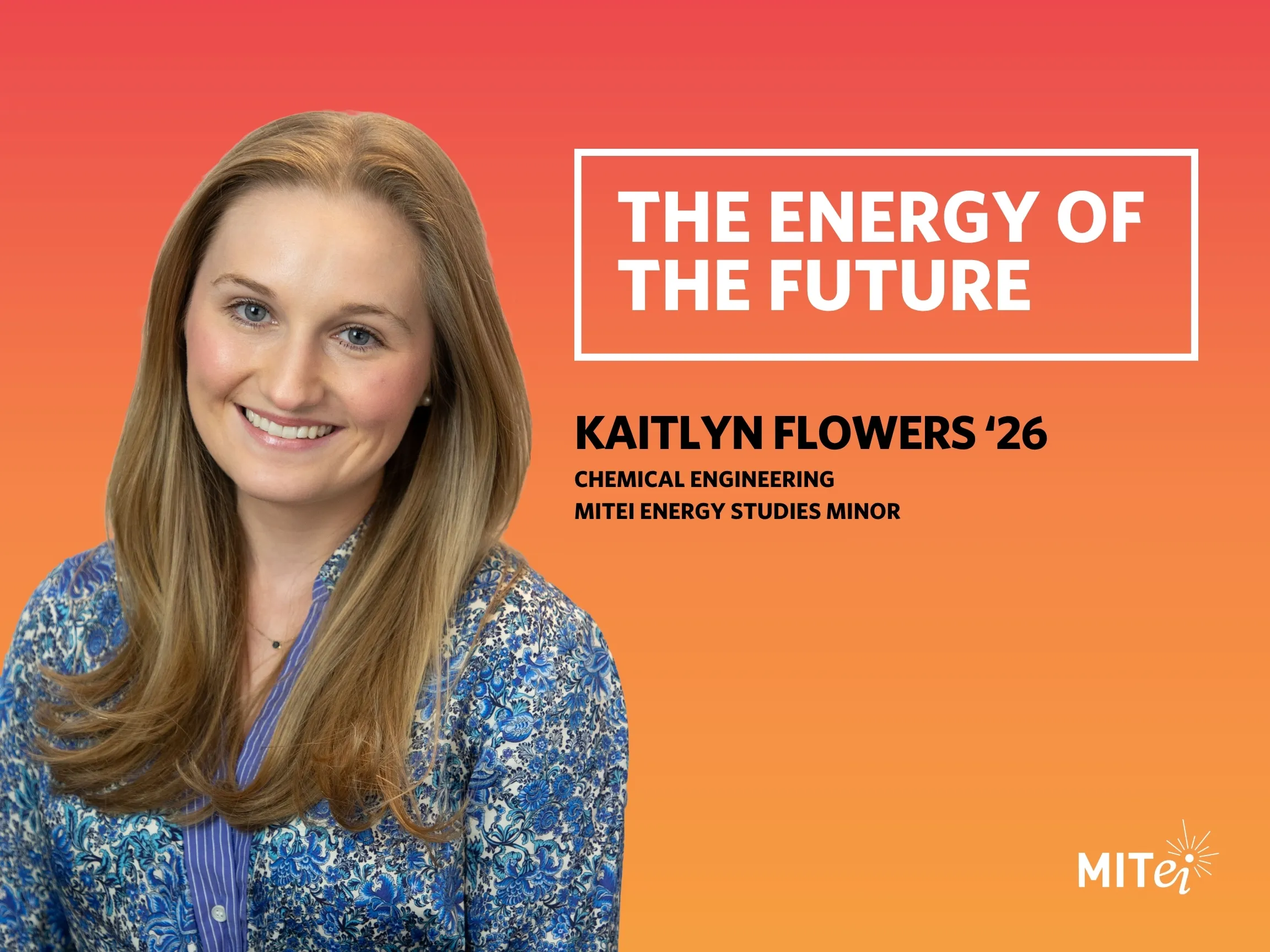
Kaitlyn Flowers '26, a chemical engineering major and energy studies minor (ESM) at MIT, analyzes the policies and economics shaping the energy industry, focusing her studies on the business side of the sector. Flowers discusses how the ESM and climate change have shaped her perspective on the energy sector and her potential role in it.
Q. What are you studying at MIT and why did you decide to add an energy studies minor?
A. I’m studying chemical engineering, which is all about understanding how tiny molecules behave and harnessing their properties to do something useful. When we break the bonds holding molecules together, they release energy. Chemical engineering helps us understand how much energy to expect when we break certain types of bonds, how much of that energy can be captured to do something useful, and how we might transport that energy to the right people and places, so they get it when they need it.
The energy industry is incredibly dynamic and affects many people. Domestic politics, natural disasters, and the state of the economy all impact the energy sector and determine which generation assets are dispatched or which fuels are consumed. In turn, energy interacts with nearly every other industry. Energy flows into industries like pharmaceuticals as an input to make certain chemicals for drug manufacturing; it flows into agriculture as an input for fertilizer; and it’s a part of transportation, heavy industry, construction, and more.
My core major at MIT helps me understand how energy is produced, but if I want to understand how the entire industry functions, I need to understand the economics that underpin the industry and the policies that regulate it. The ESM fills in those gaps, so I have a better understanding of how businesses and nations might come to play in the sector.
Q. How does climate change impact how you think about the energy sector?
A. Energy is a complicated sector with many challenges. While climate change is one challenge, the sector must also guarantee affordability, reliability, and sector competition. With regards to climate change, most energy today comes from fossil fuels, which releases carbon dioxide into the atmosphere and warms our planet. We need to find a way to either burn fewer fossil fuels by substituting them with other energy sources and/or take carbon dioxide out of the atmosphere.
Then, we must consider cost. Energy isn’t something like a luxury car or handbag—nobody’s paying a premium for it. Therefore, you need to be able to produce energy at a low cost, so you can get it to as many people around the world who need it. To do this, we need to encourage an environment that allows for businesses in the private sector to compete, spurring innovation and producing the most efficient product for consumers at the lowest price.
Lastly, we need to make sure that the energy system can reliably meet our needs at peak demand.
The energy sector is challenged with developing an energy portfolio that reduces fossil fuel reliance and encourages competition so the most efficient, cheap, and reliable energy can be provided to those that need it most.
Q. Do you want to work in energy after you graduate?
A. Yes, although my outlook on the exact role I will play has shifted since coming to MIT. I learned early on in college that I didn’t enjoy research—the daily work was too narrowly scoped for my personality and skillset. Business caught my interest as a way to work on problems in the industry at a broader scale.
In examining the energy challenges I laid out, it’s clear that no one technology can solve all those problems at once. We must think about how different regions or countries can create portfolios of assets that—when taken at the aggregate—can reasonably solve those problems together. I would like to play a leadership role in helping to put together those portfolios of assets or providing those energy generation assets to make sure we get enough energy to the people that need it.
When I graduate this spring, I’ll be moving to New York to work as an investment banking analyst in the Natural Resources Group at Goldman Sachs. I’ll be helping power, chemical, and metals and mining companies think about strategies that allow them to grow and compete in the sector and how to get the capital to pursue those strategies. The ESM rounded out my energy curriculum at MIT, so I’ll have a better understanding of how the sector functions when serving my clients.
MITEI’s Energy of the Future series highlights in video and text MIT students working to advance the energy transition and expand energy access.