Around the world, tens of thousands of power plants, large industrial plants, and other facilities critical to the global economy pump millions of tons of climate-warming greenhouse gas emissions into the Earth’s atmosphere each year. A few have systems in place that are designed to capture carbon dioxide (CO2) before it is emitted, but those systems are expensive to run and not always effective.
Even as the world transitions to cleaner and renewable energy options, these facilities will continue to rely largely on fossil fuels until zero- and low-carbon energy sources can operate at scale. In the meantime, there is a need for effective and affordable methods to capture the CO2 that the power plants and other industrial facilities produce.
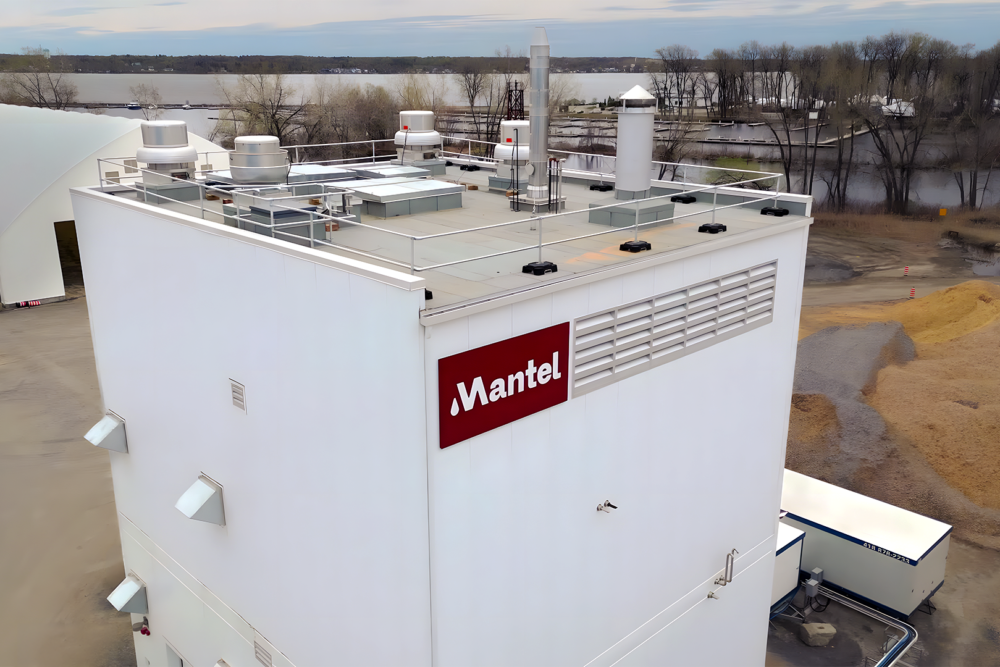
Mantel Capture, a startup based on technology developed in part with support from the MIT Energy Initiative (MITEI), has raised $50 million in capital and is managing multiple demonstration projects of its carbon capture technology. Paper, packaging, and tissue company Kruger Inc. uses the technology at its pulp and paper mill in Quebec, and another commercial-scale project in Canada will integrate Mantel’s capture system into an existing steam generator used to extract oil from the Canadian Oil Sands. A third opportunity will be an installation of Mantel’s technology at a coal-fired power plant in West Virginia. The U.S. Department of Energy recently awarded $18.5 million to fund the deployment of Mantel’s technology at this plant. Mantel expects to capture up to 98% of the carbon emissions and also produce carbon pure enough to be sold for other products, generating a new revenue stream for the owner. Taken together, these projects test whether Mantel’s technology can enable industry, including power plants, to have cleaner facilities, with no impact on reliability and little impact on cost.
While Mantel’s current demonstration projects are in North America, the company’s founder sees strong market potential on other continents. “We need to be deploying these carbon-capture technologies, particularly through Asia and Africa, because that’s where the people are. That is where the industry is, increasingly,” says Cameron Halliday SM ’19, MBA ’22, PhD ’22, and CEO of Mantel.

Cameron Halliday SM ’19, MBA ’22, PhD ’22, and co-founder and CEO of Mantel. Credit: Courtesy of Mantel Capture.
The evolution of carbon capture
Capturing and removing CO2 from gas streams has been possible for decades, but the approaches are expensive when used on flue gas streams, in part because they consume so much energy. The hot exhaust needs to be cooled down for the sorbent material to collect the CO2 and then heated back up so the sorbent releases the CO2 and can be used again.
For decades, researchers have tried to find CO2 capture material that could work at high temperatures, but the most promising materials become less effective and need to be replaced after a few absorb-release cycles. Indeed, the sorbent now receiving the most attention shows a 70% decline in performance in just 10 absorb-release cycles. To explain, Halliday offers an analogy: “That’s like charging your phone 10 times and losing 70% of its battery power. In practice, you’d need to cycle your sorbent for thousands, tens of thousands of cycles, over 20-30 years. So that’s not an economically viable commercial product.”
In 2019, Halliday; his PhD thesis supervisor, T. Alan Hatton, Ralph Landau Professor of Chemical Engineering Practice, Post-Tenure; and Takuya Harada, research engineer in the Department of Chemical Engineering, began to search for a sorbent that would work at high temperatures and wouldn’t degrade so quickly.
Finding the right mixture: Persistence, theoretical investigation, and a bit of serendipity
Their goal was well-defined: “The interaction between the sorbent material and the CO₂ needs to be strong, so you can capture it well, but not so strong that you can’t get it back off,” Halliday explains. And it had to work at high temperatures, without degrading over time. In a series of experiments with different compounds, they found that mixtures of borates (boron plus oxygen) and lithium seemed promising, but there was still some decay in performance. Furthermore, the mixtures used so much lithium that the approach was expensive.
Their breakthrough came when they added some sodium to their mixture. The resulting sorbent displayed no measurable decay—even over a thousand cycles. “We never expected to solve the problem,” Halliday recalls. “We expected to reduce the problem. And this entirely eliminated the problem, to the point where we were kind of baffled.” After months of modeling and theoretical work, they figured out why. Solid sorbents degrade because, as they heat up and cool down, their structure changes, and they crack. “Our novel sorbent didn’t degrade because it’s inherently a liquid at high temperatures,” says Halliday. Their proprietary salt is solid at room temperature but becomes a liquid at the operating temperatures of industrial facilities such as boilers, kilns, furnaces, and gas turbines. After every capture-and-release cycle, the salt remains in liquid form.
The advent of Mantel Capture
In 2022, Halliday and his colleagues Danielle Colson Rapson and Sean Robertson, PhD ’22, launched Mantel to build their system to capture CO2 for all types of large industrial plants. Rapson is now COO of Mantel, Robertson is CTO, and Hatton and Harada serve as the company’s scientific advisors.
The Engine, an MIT-affiliated startup incubator, led Mantel’s first funding round and is still one of the startup’s major investors. In addition, The Engine is home to Mantel’s offices and lab space. There, Mantel built a shipping-container-sized version of their system that’s been running for two years.
Here’s how Mantel’s carbon capture process works: The hot flue gas enters a chamber, where it flows through droplets of molten salt that enter from above through an injector that looks like a shower head. The molten salt captures the CO2 in an exothermic chemical reaction, meaning that it gives off energy, which is later recovered. Once the CO2 is removed, the cleaned exhaust exits to the atmosphere. The energy produced throughout the capture cycle is converted into high-pressure steam, which can be used to generate electricity or be fed back into plant operations.
Meanwhile, the sorbent with the trapped CO2 passes to the desorption stage, where it’s heated up by burning fuel in air, and the hot exhaust that forms is sent back through the CO2 capture system for cleanup. As the sorbent heats up, the CO2 boils out and is recovered as a high-purity product. The CO2-free salt is now ready to recirculate through the system, and the CO2—now 99.9% pure—is ready for the company to use or to sell, providing a new revenue stream.
Interest from industry
Mantel’s system is designed for all industries where steam and heat are central to operations, and it can be connected to any facility with little or no modification. And interest is high.
Mantel has more than 100 projects in their commercial pipeline, Halliday says. The targeted facilities include refineries, data centers, cement and steel plants, oil and gas companies, and others. Many of the discussions are at an early stage, involving conceptual design and feasibility studies.
Halliday’s vision is that carbon capture technology will be an automatic addition to all new industrial plants. Equipment has long been used to remove sulfur dioxide and other pollutants from flue gases. “No one thinks about that technology anymore. It’s just deployed on the back of everything. It’s part of how industry operates,” he says. “In the future, also including carbon capture equipment should become standard practice.”