MIT Energy Initiative (MITEI) Director William H. Green reflects on the impact of MITEI’s two decades of energy research, education, and outreach.
3 Questions: Tackling energy challenges in a changing world
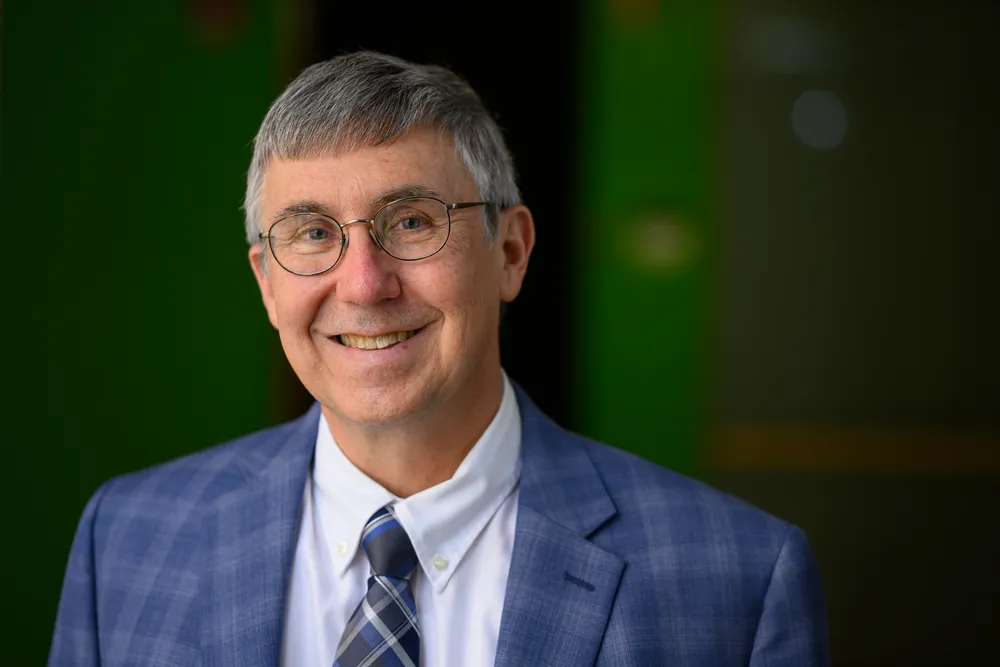
Gretchen Ertl
As the MIT Energy Initiative marks 20 years since its founding, Director William H. Green reflects on past successes and future challenges to solve.
Research areas
Since the founding of the MIT Energy Initiative (MITEI) in 2006, the challenges facing the world’s energy ecosystem have become more pressing, with dramatic shifts in domestic and international energy policies, geopolitical instability, unexpected supply chain disruptions, and spikes in demand. As MITEI celebrates its 20th anniversary, MITEI Director William H. Green reflects on the impact of MITEI’s two decades of energy research, education, and outreach. Green, the Hoyt C. Hottel Professor of Chemical Engineering, also describes a future shaped by a shifting energy landscape and by the urgent, ongoing need to solve the complex problems facing global energy systems.
Q: MITEI was founded in 2006 to bring MIT's energy researchers together around a shared goal of creating the solutions and technologies that will transform the world's energy systems. What do you consider to be some of MITEI’s most important impacts?
A: Over the years, I’ve seen MITEI from different angles. I’ve been a faculty member with research projects and graduate students supported by MITEI’s member companies. I’ve had undergraduate students working in my lab through MITEI-funded Undergraduate Research Opportunity Program (UROP) projects. I’ve also been involved in MITEI events as a speaker and panelist, and I’ve sought feedback from member companies to make my research more timely and relevant. Two and a half years ago I became the director of MITEI, affording me a whole new perspective. Looking back over the past 20 years, MITEI has funded more than 1,100 research projects, supported over 3,000 graduate students and postdocs, and brought nearly $1 billion in funding to MIT. All these elements contribute to sustaining a tremendous energy ecosystem at the Institute.
Twenty years ago, MITEI was formed in response to the deep interest of MIT’s faculty in energy problems. My predecessors as MITEI directors, Ernie Moniz and Bob Armstrong, built MITEI’s reputation, influence, and strong relationships with companies. Today MITEI is not only responsive to the shifting interests of MIT’s energy researchers and MITEI’s member companies, but actually shapes the energy ecosystem on campus and beyond, especially through vehicles like our “Future of…” energy studies. MITEI makes critical and often long-lasting connections between MIT researchers and MITEI’s member companies. As a result, we know the energy research we are doing is solving problems that companies are struggling with today and anticipating for the future. MITEI and our member companies also provide MIT researchers with the support to do energy innovation, and some of these early-stage ideas become startup companies years later. About 65 companies have grown out of MITEI research or are directly connected with MITEI-funded graduate students or postdocs, and some of those companies have gone on to have a major impact on the energy transition.
Q: You became MITEI’s director in spring 2024, quickly mobilizing MITEI and the researchers and students with whom we work to tackle the energy issues relevant to our current times. Prior to this, how did your research and the MIT Energy Initiative intersect?
A: I was fortunate to work on a wide variety of MITEI projects before becoming director. Early on, I did MITEI projects focused on removing mercury, carbon dioxide, and sulfur impurities from fuel streams and on changing the properties of fuels to increase efficiency and reduce toxic emissions from engines. I was also involved in an important MITEI project to improve predictions of liquid-phase chemistry for energy applications. One component of that project was extremely successful, leading to development of fast, accurate, and generalizable ways to predict solvent effects on phase equilibria and on reaction rates and selectivity. The ability to predict the solubility of solids in different solvents has since attracted a lot of interest from the pharmaceutical industry. MITEI was critical in making the connections between my research group and industry, which supported these and other projects, even when the research was initially at the edge of my expertise. One MITEI project I particularly enjoyed was the Mobility of the Future study, for which I served as the faculty director. That study, which was published in 2019 (before Tesla ever earned a profit), predicted that electric vehicles (EVs) would begin to be affordable enough to significantly compete with gasoline cars during the period 2025-2030. Actual global EV sales have increased a bit faster than we predicted in 2019, in part because we did not anticipate the global conflicts that have raised world gasoline prices.
Most of my energy research projects were done primarily with MITEI-funded graduate students or even UROPs. I-Yun Lisa Hsieh was a major contributor to the Mobility of the Future study and is now an associate professor at National Taiwan University, where she founded and leads their E3 Research Center for decarbonization and intelligent transformation of the energy system. I should also mention Yunsie Chung, the graduate student who did important work on solvent effects; she now is now doing AI research as associate director, modeling & informatics, for Merck. Pierre Walker, a UROP who worked with Yunsie, completed his PhD at Caltech and is now a world leader in the thermodynamics of liquids and a postdoc at MIT. Another key student was David Couling, who did the mercury capture project. After graduating from MIT, he took a position in industry, going on to win the AIChE’s 2025 Industrial Progress award.
Q: What do you believe are the biggest energy challenges we are facing today and in the coming years?
A: Energy use is currently responsible for about three-quarters of global greenhouse gas emissions, and there is wide agreement that we need to reduce these emissions, which can only happen if we transform our energy systems. Decarbonizing global energy systems is a complex challenge that spans all sectors of our economy, including buildings, food, transportation, and industry. And that decarbonization must be accomplished without disrupting existing energy supplies or making energy more expensive or less accessible. Over the last two decades that MITEI has existed, there has been significant progress on addressing the energy challenges that we face in the United States and globally. At the same time, energy demand continues to grow, whether from new technologies like AI or from the more than one billion people who are still gaining access to reliable electricity. As we have seen recently, global conflicts can also unexpectedly disrupt energy supplies and produce shocks that may require years to recover from. The rebound, which will have to happen simultaneously with expansion and decarbonization of energy systems, will require a combination of technical solutions, policy shifts, large-scale investment, and new levels of societal acceptance. And the changes can’t happen overnight.
Every day, MIT researchers working with MITEI are addressing key energy issues, including data center power demand, decarbonization of industry, grid resiliency, carbon management, renewable energy supply, and the need for sustainable fuels. The hundreds of students funded by MITEI invigorate the energy community on campus by bringing fresh approaches and real passion to transforming the world’s energy systems, and many of them go on to become leading experts in energy R&D or to hold other important roles in business and government. These are truly reasons to be hopeful about our energy future, regardless of the obstacles or challenges that we face today.