Energy Scholars

Filter by

Results

2026

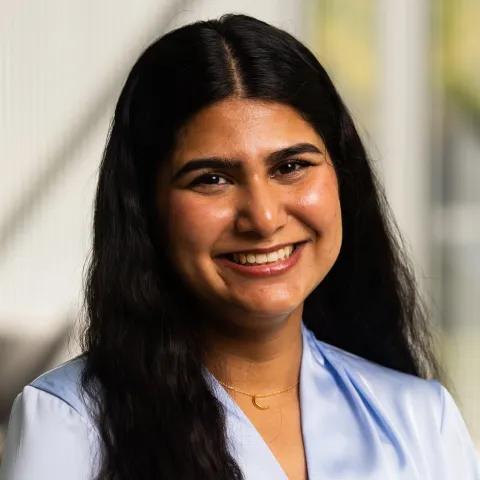
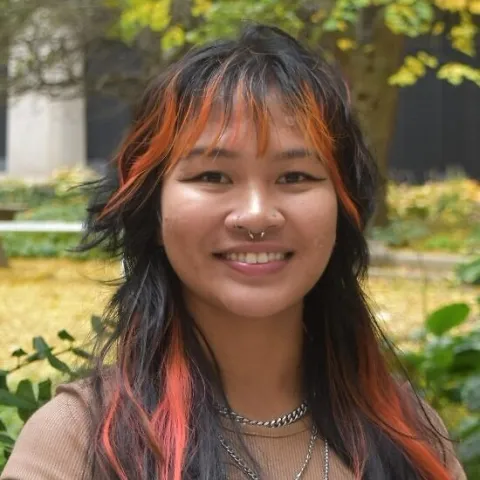
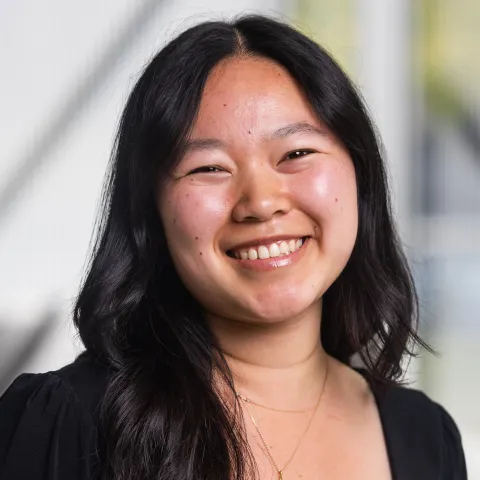
Kylie Akiyama

PhD Candidate, Biological Engineering
Research projects

I aim to engineer magnetotactic bacteria to selectively biomineralize and magnetically recover critical metals from mining and electronic waste streams, improving resource recycling for the clean energy transition. By combining engineered cellular metal uptake, magnetite doping, magnetosome membrane engineering, and intracellular metal-sequestering coacervates, my work enables low-energy, low-waste recovery of scarce elements essential for renewable energy technologies. This biologically driven approach reduces reliance on environmentally damaging mining while strengthening resilient, circular supply chains for global decarbonization.

Advisor

Ariel Furst, Associate Professor, Chemical Engineering
2026

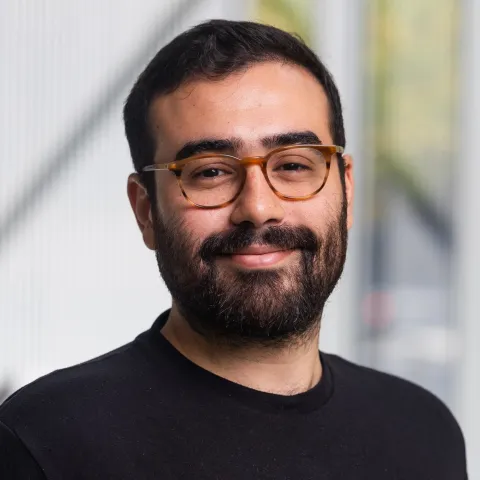
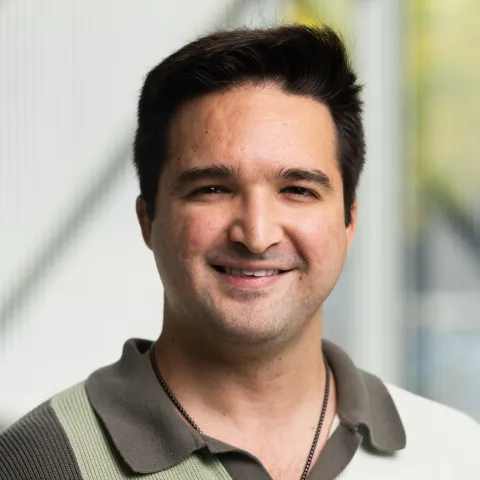
Constantine Athanitis

PhD Candidate, Materials Science and Engineering

Research projects

Physically-based design principles for selective CO₂-to-CH₄ conversion in exsolved metal-oxide catalyst systems

My research develops physically-based design principles for selectively converting CO₂ into methane using protonic ceramic electrolyzer cells. By identifying electronic structure descriptors that govern CO₂ reduction reaction energetics, proton management, and product selectivity in exsolved metal-oxide catalyst systems, I aim to enable rapid materials screening and rational catalyst design. This framework helps address key barriers to efficient CO₂-to-CH₄ conversion, including parasitic hydrogen production and poor selectivity. Ultimately, my work will advance the development of carbon-neutral fuels and provide scalable pathways for storing renewable energy in chemical form, supporting global decarbonization efforts.

Advisor

Bilge Yildiz, Professor, Materials Science and Engineering, Nuclear Science and Engineering
2026

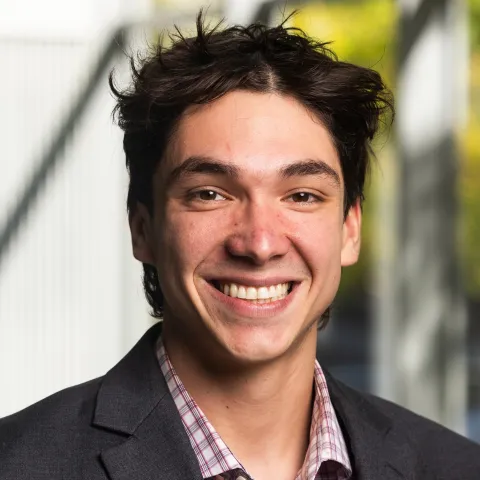
Ewan Barrett

PhD Candidate, MIT EAPS

Research projects

Geothermal energy is an essentially inexhaustible option for abundant, accessible, and affordable future energy sources. The next frontier in deep geothermal heat mining is accessing supercritical water. At these depths, rocks transition from brittle to ductile behaviour, presenting a key challenge for this technology: borehole stability. My novel research draws together unique laboratory experiments and instrumentation, cutting-edge microstructural analyses, and new analytical methods using artificial intelligence to simulate and examine borehole creep under representative deep-drilling conditions. The subsequent data will be critical for developing the next generation of ultradeep-drilling projects that have the potential to transform the global energy landscape.

Advisor

Matěj Peč, Associate Professor, Earth, Atmospheric, and Planetary Sciences
2026

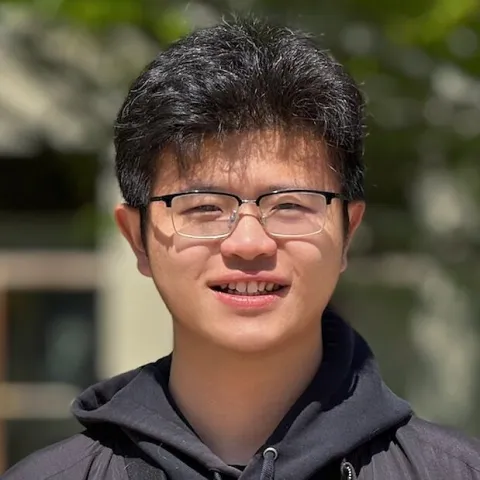
Anatole Borisov

PhD Candidate, Chemistry

Research projects

My research aims to develop new hydrometallurgical approaches to processing minerals ores to separate and purify the components within them without producing any byproduct waste. This is of utmost importance to the zero-carbon energy transition, as many important technologies, from wind turbines to fuel cells, rely on elements derived primarily from mineral ores. The transition to a sustainable energy production system will expand demand for mining and critical material processing, and the hydrometallurgy industry must be prepared to meet those demands sustainably.

Advisor

Yogesh Surendranath, Professor, Chemistry
2026

Mouyang Cheng

PhD Candidate, Materials Science and Engineering

Research projects

My research develops AI systems that not only predict high-performance energy materials, but also generate experimentally feasible synthesis pathways. By converting phase diagrams, literature recipes, and laboratory notebooks into a confidence-weighted knowledge graph, I build retrieval-augmented models that propose constraint-aware growth protocols and refine them through closed-loop experimental feedback. This approach bridges the gap between computational discovery and laboratory realization. Its impact lies in accelerating the deployment of synthesizable, scalable materials for low-loss electronics, superconductivity, and next-generation clean-energy technologies worldwide.

Advisor

Mingda Li, Associate Professor, Nuclear Science and Engineering
2026

Jonathan Edelman

PhD Candidate, Mathematics

Research projects

Quantitative inversion of Distributed Acoustic Sensing (DAS) measurements for subsurface property estimation in energy systems

My research develops mathematical and computational methods to interpret Distributed Acoustic Sensing (DAS) data for subsurface monitoring. DAS uses fiber-optic cables to measure strain along kilometers of infrastructure, providing dense, real-time observations of underground processes. I formulate DAS measurements as line-integral data in a PDE-constrained inverse problem framework to recover subsurface properties such as wave speed, density, and dynamic stress changes. By enabling more accurate monitoring of carbon storage, geothermal systems, and hydrogen reservoirs, this work strengthens the safety, reliability, and scalability of technologies critical to global decarbonization and long-term energy security.

Advisor

Laurent Demanet, Professor, Applied Mathematics
2026

Alexander Koh-Bell

PhD Candidate, Mechanical Engineering

Research projects

My proposed research aims to develop a low-cost system for environmental carbon removal based on marine electrochemical pH swing technology. While much attention has focused on direct air capture, the ocean represents a promising alternative due to its higher concentration of dissolved carbon and natural conductivity. Through reactor architecture and system design advancements using a membrane-free bismuth pH modulation platform, this work seeks to increase reaction rates while reducing material and capital costs. By combining electrochemical engineering with techno-economic analysis, this research aims to advance scalable, cost-effective carbon removal infrastructure.

Advisor

Kripa Varanasi, Professor, Mechanical Engineering; Alan Hatton, Professor, Chemical Engineering
2026

Beniam Kumela

PhD Candidate, Chemical Engineering

Research projects

Polymer processing is energy intensive and strongly influenced by flow-induced crystallization, which alters melt rheology during manufacturing. Current mesoscopic slip-link simulations capture this physics but are too computationally expensive for industrial design. I develop a physics-informed digital twin that uses universal differential equations to learn a thermodynamically consistent constitutive model directly from mesoscopic simulations and experiments. This reduces computational cost by orders of magnitude while preserving physical insight. The resulting tool enables energy-efficient polymer processing, reduces material waste, and supports lightweight, high-performance materials critical for transportation, electrification, and renewable energy systems.

Advisor

Gregory Rutledge, Professor, Chemical Engineering
2026

Haihui Lan

PhD Candidate, Chemistry

Research projects

Electrifying material discovery: Nano-thermal knitting and AI-driven high-throughput synthesis for net-zero energy storage

Advisor

Iwnetim Abate, Assistant Professor, Materials Science and Engineering
2026

Menno Laveaux

PhD Candidate, MIT-WHOI Joint Program

Research projects

From plume to proof: GPU-accelerated 3D near-field modeling and chemistry-coupled verification for marine CO₂ removal

I’m developing GPU-accelerated 3D models to verify marine carbon dioxide removal (mCDR), including Direct Ocean Capture and Ocean Alkalinity Enhancement, by predicting how treated seawater plumes mix and exchange CO₂ with the atmosphere over the first hours to days after release. By coupling physical (Oceananigans.jl) and biochemical processes (OceanBioMe.jl), I will quantify near-field uncertainty and produce estimates of CO₂ drawdown. The estimates are validated by high-resolution data collected during a field experiment in the Port of LA. This work helps make mCDR a credible climate tool alongside decarbonization, informing regulators, investors, and industry on performance, monitoring needs, and risk.

Advisor

Thomas Peacock, Professor, Mechanical Engineering; Director, ENDLab
2026

Ralitsa Mihaylova

PhD Candidate, Nuclear Science and Engineering

Research projects

Enabling scalable hydrogen energy storage through predictive modeling of liquid hydrogen dynamics

Achieving deep decarbonization requires scalable technologies for storing and transporting clean energy. My research advances liquid hydrogen storage, a promising solution for low-carbon transportation, industry, and grid-scale energy systems. I develop physics-based computational models that predict multiphase flow and phase-change dynamics in cryogenic hydrogen storage, enabling accurate prediction of current bottlenecks, such as boil-off losses and pressure recovery. Validated against experiments, these tools improve the safety, efficiency, and reliability of hydrogen storage and transport. By enabling more efficient hydrogen infrastructure, my work supports the global transition to sustainable energy systems.

Advisor

Emilio Baglietto, Professor, Nuclear Science and Engineering
2026

Nazish Naeem

PhD Candidate, Electrical Eng. & Computer Science

Research projects

Net-zero power persistent subsea sensing and localization for remote and submerged clean energy assets monitoring

I work on ultra-low-power underwater sensing, communication, and localization systems that enable persistent monitoring in subsea environments where conventional deployments are constrained by power and maintenance. This capability is increasingly important as more of the energy system moves offshore as part of the low-carbon transition, where reliability depends on observing infrastructure and environmental conditions over long timescales. By making monitoring more scalable and less operationally intensive, my research helps reduce downtime, improve reliability, and lower the cost and operational footprint of maintaining critical ocean-based energy and climate infrastructure.

Advisor

Fadel Adib, Professor, Electrical Engineering & Computer Science, MIT Media Lab
2026

Armando Rodrigues Carneiro Neto

PhD Candidate, Mechanical Engineering

Research projects

Enabling mass-saving multifunctionality in structural energy storage via nanoengineered bulk architectures

This research develops structural energy storage materials that simultaneously carry mechanical loads and store electrical energy. By infiltrating a newly designed structural solid polymer electrolyte into nanoengineered carbon nanotube and boron nitride nanotube architectures, this work aims to create composite structures that function both as energy storage and as load-bearing materials. Such multifunctional systems can eliminate redundant structural mass in electrified vehicles, improving system-level energy efficiency. By transforming structural components into active energy-storage elements, this research introduces a new design paradigm for lightweight electrified transportation and contributes to global decarbonization through system-level mass reduction.

Advisor

Brian L. Wardle, Professor, Aeronautics and Astronautics
2026

Brandon Tapia

PhD Candidate, Chemical Engineering

Research projects

Mechanistic investigation of mobile glassy dynamics in CANAL polymers for molecular separation

Advisor

Zachary P. Smith, Associate Professor, Chemical Engineering
2025

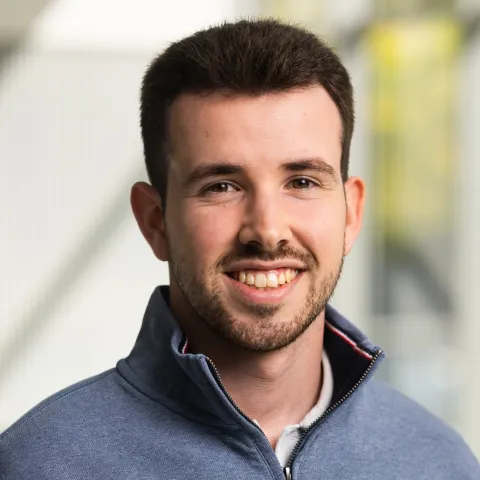
Albert Chen

PhD Candidate, Inst. for Data, Systems, & Society

Headshot of Albert Chen, Energy Scholar

Research projects

Advisor

Noelle Selin
2025

Eric Kyle Cheung

PhD Candidate, Architecture

Headshot of Eric Kyle Cheung, Energy Scholar

Research projects

Advisor

Christoph Reinhart
2025

India Cox

PhD Candidate, Chemistry

Headshot of India Cox, Energy Scholar

Research projects

Advisor

Yogesh Surendranath
2025

Yifu Ding

Postdoctoral Associate, MIT Energy Initiative

Headshot of Yifu Ding, Energy Scholar

Research projects

Advisor

Thomas Magnanti
2025

Quinn Early

PhD Candidate, Civil and Environmental Engineering

Headshot of Quinn Early, Energy Scholar

Research projects

Advisor

Mike Howland
2025

Gabriele Ferrero

Postdoctoral Associate, MIT PSFC

Research projects

Advisor

Sara Ferry
2025

Braden Gilleland

PhD Candidate, Mechanical Engineering

Headshot of Braden Gilleland, Energy Scholar

Research projects

Advisor

Paul Barton, Asegun Henry
2025

Katelyn Groenhout

PhD Candidate, Chemical Engineering
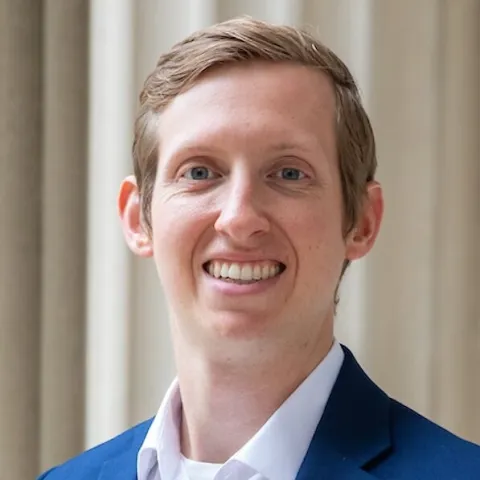
Headshot of Katelyn Groenhout, Energy Scholar

Research projects

Advisor

R. John Hansman, Yuriy Roman
2025

Darya Guettler

PhD Candidate, Architecture

Headshot of Darya Guettler, Energy Scholar

Research projects

Advisor

Christoph Reinhart
2025

Jimin Kim

Postdoctoral Associate, Chemical Engineering
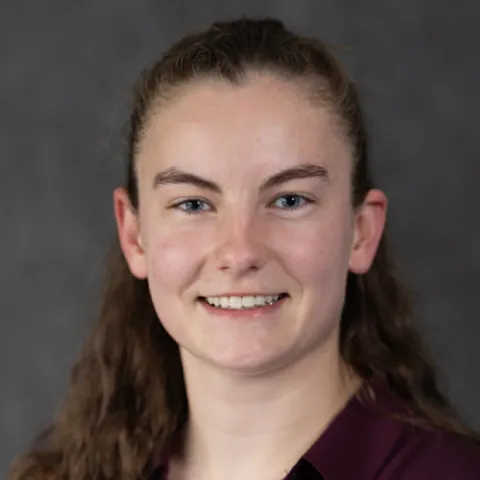
Headshot of Jimin Kim, Energy Scholar

Research projects

Advisor

Michael Strano
2025

Adriana Ladera

PhD Candidate, Computational Science & Engineering

Headshot of Adriana Ladera, Energy Scholar

Research projects

Advisor

Tess Smidt

unfiltered: all results