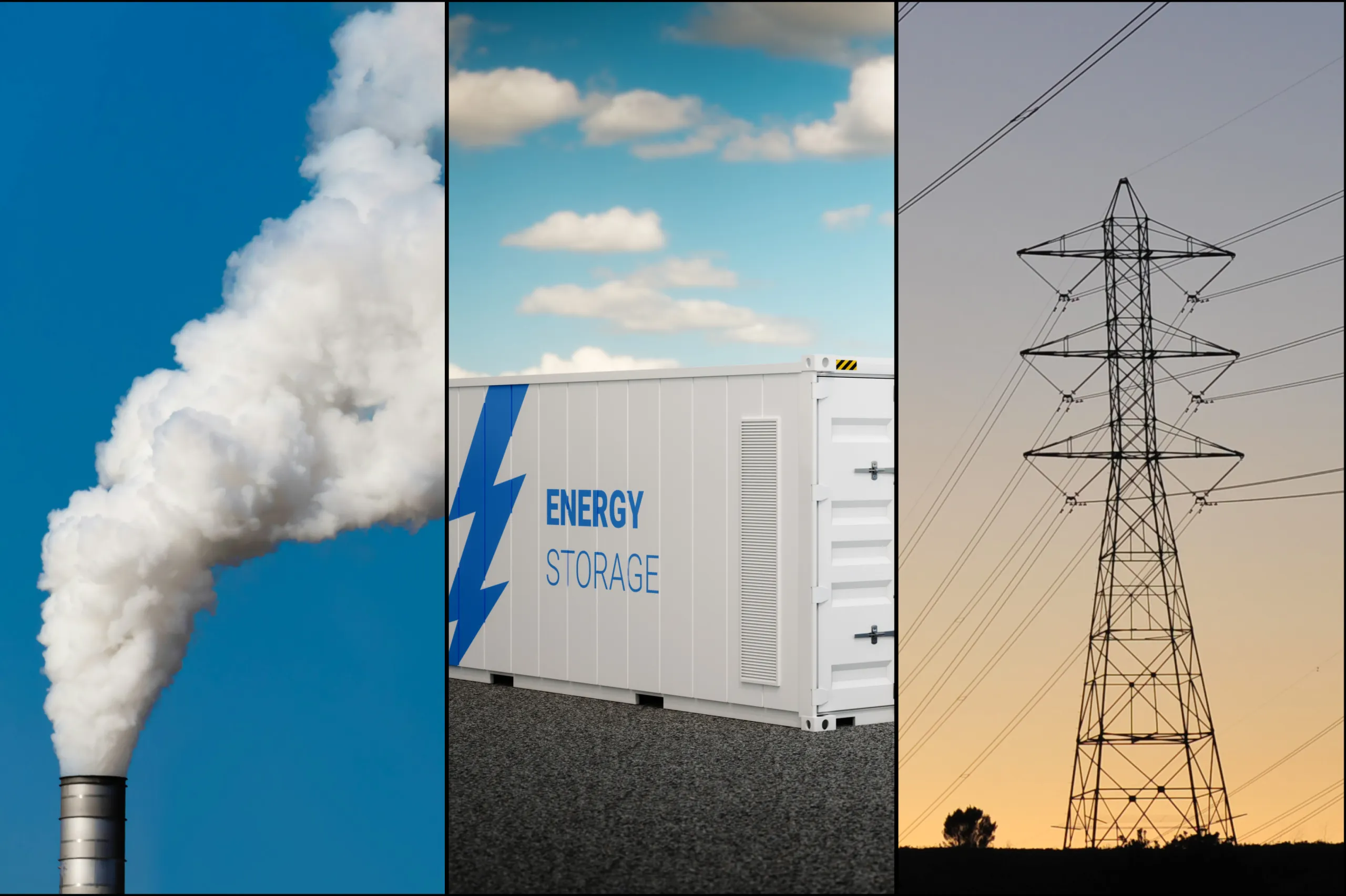
Recognizing the energy-related challenges its member companies are currently facing, the MIT Energy Initiative (MITEI) announced three new focus areas for research—long-duration energy storage (LDES), carbon management, and grid modeling and planning. These focus areas are part of MITEI’s industry research consortium, the Future Energy Systems Center, and will be a primary vehicle for driving engagement between MIT researchers and members. Deeper engagement in these areas will enable identification of the most important challenges member companies face and help target research efforts where they can have the most impact.
“These topics—grid modeling and planning, storage, and carbon management—will be central in the evolution of our energy sector. They are complex, and there is uncertainty about the path forward,” said Morgan Andreae, executive director of the Center. “That complexity and uncertainty make them good topics for our researchers to work on.”
Each focus area will be led by a program manager. MITEI Research Scientist Ruaridh Macdonald will lead the LDES area. Anu Annaswamy, director of the Active-Adaptive Control Laboratory in MIT’s Department of Mechanical Engineering, will lead the grid modeling and planning area. MITEI Deputy Director Carolyn Ruppel will lead the carbon management area.
The focus areas were announced at the Center’s fall workshop with members in late September. The program managers each shared the current challenges in their respective areas, as well as some of the related projects MITEI is supporting.
Long-duration energy storage
Energy storage remains an area of significant potential, as well as uncertainty, according to Macdonald. Among the current issues for energy storage are the evolving role storage plays on the grid, its economic viability, and market pathways for new technologies.
“The duration of storage is no longer the only feature that differentiates types of storage. Degradation, stability across states of charge, and reliability are critical in assessments of storage,” said Macdonald.
The use of utility-scale storage is growing globally and domestically. In 2020, there were about 5 gigawatts of discharge capacity additions globally, while in 2025, that number grew to almost 90 gigawatts, with most of that growth in China.
“China is the global leader in the development and deployment of storage, but we are seeing large installations of storage in grids around the world,” Macdonald said.
Meanwhile, the primary use-case for storage is changing. Using storage for ancillary services—supporting the control and stability of the grid—has yielded shrinking revenues over the past five years. Using storage for energy shifting—capturing electricity during low-priced times and using it during high-priced times—has been increasing.
Storage technology also continues to evolve. Macdonald cited a research team in China that is developing an all-iron redox flow battery, a new type of battery chemistry, that showed almost no degradation over 6,000 cycles. A research team at a German lab is developing electrodes that are three times thicker than current electrodes, which improves the energy density of the storage system and could work with a variety of battery types.
The regulatory environment continues to shift as well, both between different countries and within the countries themselves. The shifts in storage use, continued development of the technologies, and changing regulations make energy storage an important area for focused research.
“We’re trying to understand what is the value that batteries and energy storage bring to the grid. The second part we want to understand is how well matched is revenue with that value. Lastly, in a technology-agnostic way, what are the characteristics needed for storage to succeed in different markets and different roles on the grid?” said Macdonald.
Grid modeling and planning
Today, grid operators are facing operational challenges brought about by explosive electricity demand growth driven in part by data centers, and unpredictable demand patterns caused by using electric vehicles, heat pumps, and other distributed energy resources. Looking to the future, all grid stakeholders face a paradigm shift from the traditional linear model of the 20th century to a much more complex and distributed system.
“There are a number of different moving parts of late that are really changing the landscape significantly,” said Annaswamy. “Demand has been a huge part of the conversation and it’s really outpacing grid expansion. ‘Can the grid keep up?’ is a question that is being asked again and again. You really need to make sure all the assets are lined up properly to face this growing demand.”
The growing use of distributed energy resources—everything from rooftop solar panels to localized battery storage systems—and the way they connect to the grid using inverters rather than turbines are causing bottlenecks in low- and medium-voltage distribution grids.
Grids are also at risk of failure due to larger penetration from inverter-based resources and voltage mismanagement, which could lead to another significant blackout as was experienced in the Iberian Peninsula in April 2025. Grid modeling must also now include planning decisions made over decades, as well as operations down to the microseconds.
Significant questions the researchers working in this area are asking include how to develop adaptable modeling taxonomies that will work around the world where there are differences in power plants and data centers, how the regional grids operate, and the different mixes of power being added to those grids. Researchers are also questioning whether the linear model of the past—bulk generation to transmission to distribution and load—is adequate or if they should rethink transmission strategies to accommodate modern demand and technology.
“Can we turn the whole grid on its edge and have everything be architected differently than the linear approach we used in the 20th century?” said Annaswamy. “As we go deeper into the 21st century, is there a different way in which we can look at these things?”
Carbon management
The Center's carbon management focus area addresses a critical gap: translating academic research into actionable insights for companies navigating the practical, economic, and regulatory complexities of carbon capture, utilization, and storage (CCUS) and carbon removal approaches.
A central question is whether carbon dioxide (CO2) captured and stored or carbon incorporated into long-lived products remains permanently out of the atmosphere. Determining this will require monitoring, reporting, and verification. Regulators and companies must establish standards to assess the durability of carbon storage in products and best practices to ensure CO2 sequestration is permanent.
The high cost and energy expenditure associated with most carbon capture processes are other key issues in carbon management. Policy support will likely be needed to make carbon capture more cost-competitive, and technological advances will be required to increase efficiency. A key question is whether the cost can be reduced enough and the scale expanded enough to make carbon capture practical for carbon-intensive hard-to-abate industries.
Carbon management also faces a fractured global policy landscape. Companies are seeking insight about the impact of the European Union’s carbon border adjustment mechanism (CBAM) and other emissions trading systems and carbon taxes.
“There is room to manage carbon in this system, especially if our goal is to keep emissions out of the atmosphere in the first place. We can reduce emissions. We can increase capture. We can increase utilization,” said Ruppel.
Projects supported by the Center will focus on techno-economic analyses (TEA), lifecycle assessments, systems analyses, and examination of economic policies and market conditions associated with CCUS and carbon removal. Through these projects, the Center can help member companies direct their focus and perhaps avoid investments in technologies that might never be economically viable.
Center continues to focus on current energy challenges
The Center continues to support research on a wide range of topics including fuels, data center power, and new energy technologies. However, in considering the energy system of the future, these focus areas, either directly or indirectly, will have broad impact. The Center’s extra attention in these areas will help researchers and members engage more deeply and identify the most important questions to address.
Select projects on long-duration energy storage
TEA of a molten sodium battery for stationary storage
The outlook for sodium batteries in electric vehicle storage
TEA of solid-state batteries
Can LDES provide grid protection in extreme weather?
Market pathways for LDES in the U.S.
Multi-scale production cost model of storage
The impact of energy storage on flexible computing loads
Competitive profiles for thermal energy storage
Stored energy reserve market for grid resource adequacy
Watts v. bytes: Energy storage impact analysis on flexible computing loads
Stored energy reserve market for grid resource adequacy
Multi-scale production cost modeling for optimal storage investment
Select projects on grid modeling and planning
Evaluating the impact of data center deployments on the U.S. power system
Electricity capacity market prices
The reliability cost of co-location: A microgrid based study
Watts v. bytes: Energy storage impact analysis on flexible computing loads
Optimization for the joint resiliency of power grid and e-transportation
Incorporating weather information into power resource accreditation and capacity mechanisms in wholesale electricity markets
Designing smarter net energy metering tariffs for a high-DER future
Stored energy reserve market for grid resource adequacy
Multi-scale production cost modeling for optimal storage investment
AI-based optimization for regional electric vehicle charging station networks
Coordinated building-grid planning
Adaptive optimization and learning for daily operation of clean power systems
Competing uses for clean electricity
Towards a clean, reliable, and affordable grid with a distributed energy resource-rich grid edge
AI-driven building flexibility through virtual power plant operation
Renewable energy siting for low-cost and extreme event-resilient power systems under climate change
Market pathways for LDES
Select projects on carbon management
Co-designing gas turbines and carbon capture for affordable low-carbon power
Characterizing the trade-off between CO2 capture rate and energy efficiency in amine-based carbon capture under variable feed conditions
CO2 capture an conversion: The where, what, and who of co-location
Comparative analysis of decarbonization strategies for transportation via direct air capture of CO2
Geo-CO2 to fuels: Techno-economic analysis and system-level competitiveness
Replacing crude oil with cellulosic liquid hydrocarbons: Gasoline, diesel, jet fuel, and chemical feedstocks
End use of agricultural waste: Fuel or carbon storage?
High fidelity monitoring for carbon sequestration: Integrated geophysical and geochemical investigation of field and laboratory data
Developing trustworthy monitoring/reporting/verification for marine CO2 removal
Can strategically designed industrial carbon hubs enable widespread CCU adoption?
Negative emissions technologies: A question of scale
CBAM and marginal cost of abatement
Cost-performance analysis and benchmarking of CO2 capture systems for hard-to-abate industries
Pathways to capture: Data-driven dashboards for decarbonization

